
Ministries
Resources
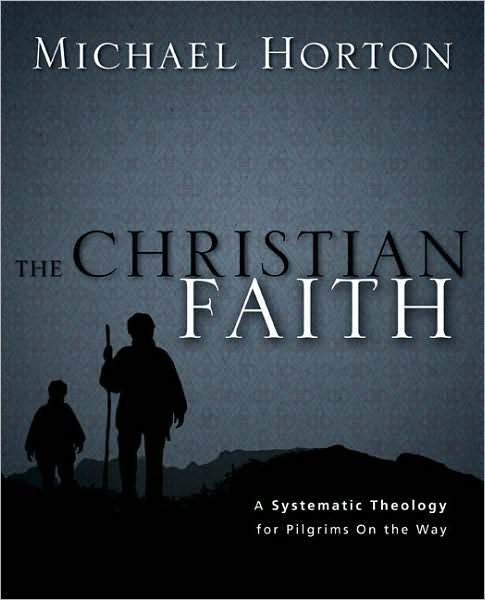
Michael Horton
Reviewed by: David Booth
The Christian Faith: A Systematic Theology For Pilgrims on The Way, by Michael Horton. Published by Zondervan, 2011. Hardback, 1056 pages, list price $49.99. Reviewed by OP pastor David Booth.
The Christian Faith begins with a careful discussion of models and methods for doing theology. Horton's own model, "Meeting a Stranger," closely integrates a redemptive-historical reading of Scripture into the task of doing theology. Those who lack formal training in modern theology and philosophy may find some of the details of these chapters challenging. Yet those who press on to grasp the main lines of Horton's argument will be richly rewarded.
A second distinctive of The Christian Faith is its attempt "to focus on specific topics in contemporary theology" (p. 29). This results in a greater portion of some chapters being given over to an irenic interaction with heterodox or heretical thinkers. This enables students to more fully grasp the relationships between Reformed Theology and other religious schemes. However, each of the twenty-six chapters must be read in its entirety, lest the reader unwittingly reduce the gap between Horton's orthodoxy and the errors of his heterodox interlocutors to a matter of mere opinion.
A third distinctive of The Christian Faith is its effort "to reflect on the potential of covenant not as a central dogma but as a framework that belongs to the integral structure of the Bible itself" (pp. 29–30). Of particular importance is the assertion that "the triune God created us to share in his drama, not in his essence" (p. 44). Horton's own covenant theology is indebted to Meredith Kline in ways that will please some, but not others. For example, many Orthodox Presbyterians will be troubled by Horton's treatment of "The Law and the Christian Life" (pp. 677–80), which falls far short of the extensive and positive treatment of the Law as a guide for Christian living (the "third use") found in our Larger Catechism.
The Christian Faith is more of a conversation between theologians (Horton teaches theology and apologetics at Westminster Seminary California) than an explanation and application of the faith. Horton's analysis is sometimes fresh, and occasionally even brilliant, yet he follows the well-worn paths of traditional Western theology, rather than facing the contemporary challenges to Christ's church. Thus, Plato receives more attention than Pentecostalism. There is extensive interaction with Karl Barth, but not with Islam. And although the widespread biblical teaching on syncretism cries out to be applied to Western consumerism, that cry is left unanswered.
Nevertheless, Horton's The Christian Faith is an excellent resource for those preparing to interact with the thinking of liberal and postmodern theologians. For biblically Reformed Christians working in theology or related disciplines, this volume should be required reading. On the other hand, many New Horizons readers will find the extensive interactions with heterodox or heretical theologies to be unfruitful. Such readers may find older works, such as those by Calvin, Hodge, and Shedd, to be both more accessible and more helpful.
June 07, 2026
May 31, 2026
May 24, 2026
May 17, 2026
April 26, 2026
Tim Keller on the Christian Life
April 19, 2026
April 12, 2026
© 2026 The Orthodox Presbyterian Church


